


Apply ethical business practices and sound systems of corporate governance and transparency to support sustainable development.
Tailings
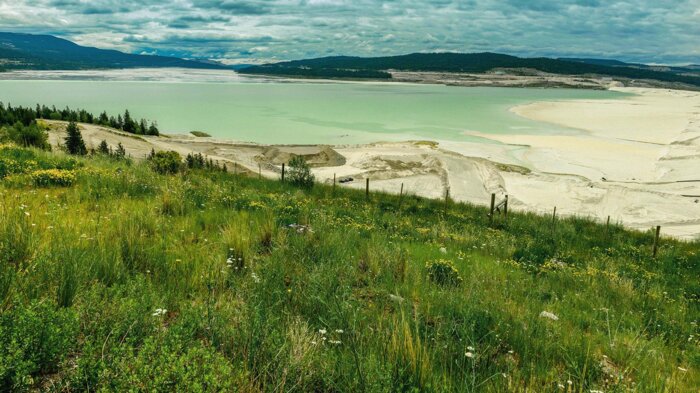
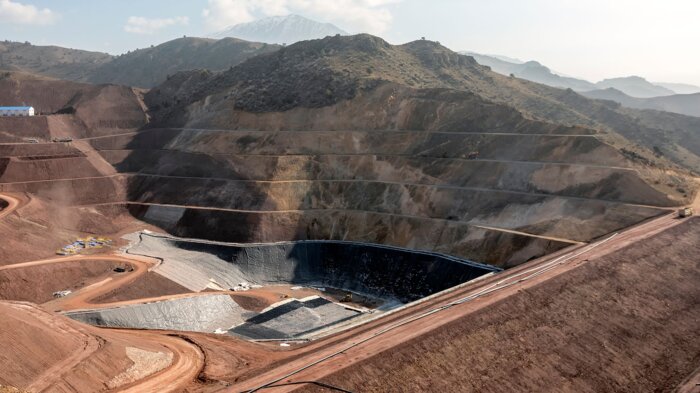
Tailings production is an inherent part of mining and metals processing and will remain so for the foreseeable future. Tailings are a by-product of mining, consisting of the processed rock or soil left over from the separation of the commodities of value from the rock or soil within which they occur. If not managed responsibly, tailings pose environmental and societal risks.
Mining and mineral processing is indispensable to the energy transition, the advancement of the Sustainable Development Goals, and the functioning of our daily lives. However, current production processes generate significant waste in the form of tailings. ICMM is committed to supporting members’ implementation of the Global Industry Standard on Tailings Management (GISTM). Alongside work on managing tailings safely, ICMM’s long-term goal is to significantly reduce or eliminate tailings. Through ICMM’s Tailings Reduction Roadmap, which lays out innovative approaches and solutions capable of significantly reducing tailings from the mine life cycle, and our broader Tailings Innovation Initiative, which brings together the industry to collaborate with technology innovators including suppliers and academia to identify opportunities to collaborate to reduce, re-use and re-imagine tailings production. ICMM is driving collective action and fostering collaboration across the mining value chain towards a lower waste future.
Issue at a glance
- The failure of a tailings facility at the Córrego do Feijão iron ore mine (Brazil) in 2019 underscored the urgent need for improved tailings management, leading to the development of the Global Industry Standard on Tailings Management (GISTM). Implementing the Standard requires integrated thinking, action, collaboration, and open sharing of challenges and solutions.
- Implementation of the Standard is not a quick or simple process. It demands a high level of sustained effort over time from multidisciplinary teams and experts.
- Effective management of tailings facilities safeguards ecosystems, prevents contamination of soil and water, and ensures the safety of nearby communities by reducing risks of catastrophic failures.
- Transparent tailings management builds trust with communities, investors, and regulators, ensuring compliance with stringent regulations, enhancing accountability, and securing long-term operational continuity. As we mine more to meet rising demand, and ore grades decline, business as usual would mean we are producing more tailings than ever. Innovations like ore sorting and precision mining can reduce the volume of tailings generated, conserving resources such as water and energy while improving the overall efficiency of mining processes.
- Exploring innovative uses for existing tailings, such as creating construction materials or extracting additional minerals, can unlock otherwise lost value that is stored in waste – generating economic opportunities and promoting a circular economy.
Making mine tailings facilities safer for people and the environment
The Global Tailings Management Institute (GTMI) is an independent, multistakeholder organisation co-convened by ICMM, the United Nations Environment Programme (UNEP), and the UN-backed Principles for Responsible Investment (PRI). Its primary aim is to improve the safety of mine tailings facilities worldwide by managing an independent auditing and certification process against the 77 requirements of the Global Industry Standard on Tailings Management (GISTM). A Certificate of Conformance will be issued for those tailings facilities found to be in conformance with the GISTM.
The core functions of GTMI are to:
- Oversee the assurance framework of the GISTM.
- Promote awareness, understanding, and adoption of the GISTM.
- Foster knowledge-sharing on tailings management among diverse stakeholders.
- Enhance transparency by providing access to details on tailings facilities and audit outcomes.
Our priorities
Through collaboration, transparency, and innovation, we can redefine tailings management to ensure a safer, more sustainable mining sector for the long term.
-
Support members to implement the Global Industry Standard on Tailings Management (GISTM)
Support ICMM members in implementing Global Industry Standard on Tailings Management (GISTM) requirements by promoting best practices, facilitating knowledge sharing, and addressing challenges to achieve full conformance. Engage with external stakeholders to build understanding and trust in the implementation process, while actively encouraging companies outside ICMM to adopt the standard.
- ICMM members have made significant progress in implementing the GISTM, completing the first round of conformance for tailings facilities with an extreme and very high consequence of classification in August 2023. Knowledge-sharing sessions have supported continuous improvement, while ongoing engagement with external stakeholders, including investors and communities, has strengthened transparency and accountability.
-
Engage with the Global Tailings Management Institute (GTMI)
Continue engagement with Global Tailings Management Institute (GTMI) founding partners to ensure appointment of the GTMI key staff and Board. Ensure effective ongoing engagement with the GTMI after establishment.
- The GTMI was launched in 2025 and ICMM has been collaborating with the other founding partners to commence the process for recruitment for key staff and Board.
-
Reduce or eliminate tailings waste by investigating alternative methods of metal and mineral recovery
ICMM’s Tailings Innovation Initiative is focussed on a future where we produce fewer, or even no, tailings. We do this by bringing together key stakeholders to identify opportunities to collaborate to reduce, reuse and reimagine tailings production.
- 2022 – Published Tailings Reduction Roadmap
- 2024 – Partnered on the Global Summit on Mine Tailings Innovation joint with MIT Environmental Solutions Initiative
Key resources
Supporting member commitments



Principle 02: Decision Making
Integrate sustainable development in corporate strategy and decision-making processes.
Principle 04: Risk Management
Implement effective risk-management strategies and systems based on sound science, and which account for stakeholder perceptions of risk.
Principle 05: Health and Safety
Pursue continual improvement in physical and psychological health and safety performance with the ultimate goal of zero harm.

Principle 06: Environmental Performance
Pursue continual improvement in environmental performance issues, such as water stewardship, energy use and climate change.

Principle 07: Conservation of Biodiversity
Contribute to the conservation of biodiversity and integrated approaches to land-use planning.
Principle 10: Stakeholder Engagement
Proactively engage key stakeholders on sustainable development challenges and opportunities in an open and transparent manner, effectively report and independently verify progress and performance.
Position Statement: Tailings Governance Framework
Enhancing focus on the key governance elements necessary for maintaining the integrity of tailings storage facilities (TSFs).
Global Industry Standard on Tailings Management
Underpinned by an integrated approach to tailings management, the Standard aims to prevent catastrophic failure and enhance the safety of mine tailings facilities across the globe.
Latest mine tailings updates


Supporting the SDGs
With our strong focus on sustainable development there is great potential for ICMM to support the mining and metals industry in making an important and lasting contribution towards the UN’s global goals. We work with members and partners to catalyse lasting social and economic progress that supports an end to poverty, protects the planet and ensures prosperity for all.
-
SDG 3: Good health and wellbeing
Mine workers are often exposed to occupational health risks such as respiratory diseases, including silicosis, and communicable diseases like tuberculosis and HIV/AIDS. Working arrangements like fly-in/fly-out can also contribute to mental health challenges, substance abuse, and domestic violence. Communities near mining operations, especially in areas with limited healthcare, may face increased vulnerability to diseases and accidents caused by mining-related traffic or uncontrolled discharges into water sources. Addressing these challenges requires proactive health and safety measures.
-
SDG 12: Responsible consumption and production
Mining generates essential materials for modern life but also produces significant waste. Increasing recycling rates and transitioning to a circular economy for metals require collaboration across the value chain. By reclassifying waste as a resource (e.g. using sulphuric acid from emissions controls in other industries), mining can drive innovation and job creation.
-
SDG 15: Life on land
Mining and its associated infrastructure can disrupt ecosystems and biodiversity. The mitigation hierarchy – avoid, minimise, restore, enhance, and offset – provides a framework for addressing these impacts. As stewards of extensive land areas, mining companies have a responsibility to contribute to biodiversity conservation and sustainable land management.
-
SDG 17: Partnerships for the goals
Mining companies bring significant expertise to partnerships that address sustainable development challenges. Sharing these experiences can inspire further collaboration and demonstrate the potential for collective progress toward achieving the SDGs.


