


Respect human rights and the interests, cultures, customs and values of workers and communities affected by our activities.
Health & Safety
Every worker has the right to a safe and healthy work environment – free from accidents and harm – where a strong culture of safety protects lives, upholds dignity and respect, and fosters continuous improvement in health and wellbeing.
Health and safety are core priorities in the mining and metals industry. Despite significant progress, we still have work to do to achieve our goal in fatality elimination. There is no one-size-fits-all approach – safe ways of working are built over time, shift by shift, day by day from the office to front line operations. ICMM members are unwavering in their commitment to worker health and safety, driving significant reductions in fatalities and injuries and building a culture of safety into every aspect of operations. To eliminate incidents, a rigorous focus on continuous improvement is essential, and we remain committed to learning from failure and sharing lessons across the industry.
Issue at a glance
- 'Health' and 'safety' are often grouped as a single concept, but their distinct needs require careful attention. Safety risks are immediate and occur in the workplace, while health risks are often long-term, with effects that may take years to manifest. Mining poses significant hazards, but effective risk management strategies can prevent both safety incidents and the onset of occupational diseases.
- While technology is essential for advancing health and safety, it is not a standalone solution – operating discipline remains critical. To be effective, technology must be integrated with rigorous operational protocols. Continuous improvement in health and safety performance requires strong leadership, sustained investment, and an unwavering commitment.
- Many mining companies have significantly improved their health and safety performance in recent years, yet material incidents continue. These events can result in debilitating injuries, fatalities, or even catastrophic consequences affecting broader communities and the environment. Investigations typically reveal that controls for known risks were not effectively managed or implemented, showing a gap between safety policies and actual practices. Adopting a critical control management approach is an effective way to focus risk management on the most critical systems to prevent serious incidents.
- Large haul trucks and other mobile equipment are leading causes of health and safety incidents in mining. Managing these risks is critical for sustainable operations and requires adopting a ‘capable solutions’ approach that combines technology with tailored training, robust maintenance programmes, and backup protocols to address site-specific challenges.
- Equally important to physical safety is psychological health. Discrimination, harassment, and assault have no place in the mining industry or society.
Transparent safety data reporting
While mining is inherently hazardous, accidents are not inevitable. Monitoring and reporting on safety indicators are crucial for sharing lessons, ultimately driving performance improvements. Since 2012, ICMM has published an annual safety report detailing members’ fatality and injury data to foster knowledge sharing and catalyse learning across the industry.
Key indicators or lessons learned from transparent safety data reporting:
- Since ICMM started reporting, fatalities across the ICMM membership have fallen from 90 in 2012 to 36 in 2023. Whilst this demonstrates significant progress, this is still 36 too many lives lost.
- In 2023, the leading cause of fatality across our member companies was from mobile equipment. ICMM is actively addressing this risk through the Innovation for Cleaner, Safer Vehicles initiative.
- Transparently reporting the hazards attributed to fatalities enables our members to understand key gaps in management practices, controls, or behaviours which can prevent future harm. Our reporting also shows company members have nearly halved Total Recordable Injury Frequency Rates (TRIFR) since 2012, demonstrating safety performance improvement.
Our priorities
For ICMM members, there is no higher priority than ensuring people’s safety and health at work. Our efforts focus on achieving breakthrough progress in eliminating harm by fostering robust safety cultures that permeate every corner and aspect of operations.
-
Working to eliminate fatalities
Continue to report transparently on members’ safety performance, whilst also looking to go further by facilitating sharing of lessons learnt across our membership and the wider industry.
- We have seen a significant reduction in the number of fatalities across our membership since we started reporting safety data. However every fatality is one too many, and we will continue to drive progress until every worker makes it home safe at the end of every shift.
-
Providing tools to make safety a priority
Periodically refresh our guidance and tools to ensure they reflect the latest leading practice.
- We look to continually refine and update our suite of tools, including critical controls guidance and leading indicators, ensuring members stay aligned with the latest leading practice in prioritising safety.
-
Building a safety culture
Share and embed leading practice on safety culture across our membership and the wider industry to underpin our goal of fatality elimination.
- We have initiated programmes that encourage open reporting and empower workers to speak up, fostering a culture of psychological safety and continuous learning across member operations.
-
Protecting workers from exposure to diesel particulate matter (DPM) and eliminating collision-related fatalities
Reduce worker exposure to harmful diesel particulate matter in underground sites and eliminate fatalities from vehicle interactions across all mining operations.
- In 2024, ICMM members committed to implementing management plans for DPM in all underground sites, and ICMM published a Diesel Particulate Matter (DPM) Good Practice Guide to support them in achieving this. Through our partnership with the Earth Moving Equipment Safety Roundtable (EMESRT) on vehicle interaction, we continue to focus on eliminating fatalities from mobile equipment through dedicated training and development of resources to support implementation of collision avoidance solutions at scale.
Key resources
Associated member commitments


Principle 04: Risk Management
Implement effective risk-management strategies and systems based on sound science, and which account for stakeholder perceptions of risk.
Principle 05: Health and Safety
Pursue continual improvement in physical and psychological health and safety performance with the ultimate goal of zero harm.
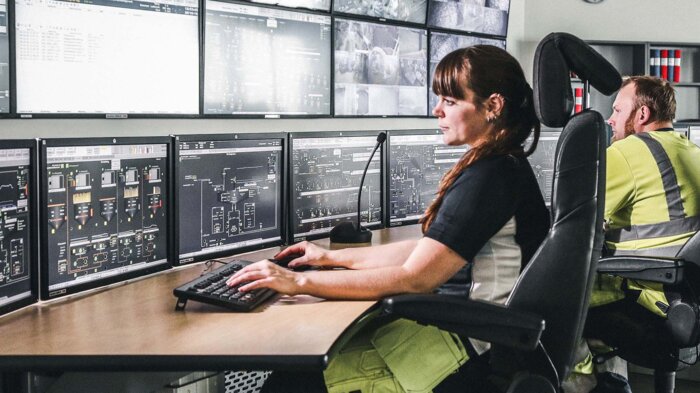
Position Statement: Diversity, Equity, and Inclusion
This Position Statement sets out ICMM Members’ collective commitment to improving diversity, equity, and inclusion in the industry and positively influencing the communities that we are a part of.
Position Statement: Mercury Risk Management
Promoting the responsible management of mercury down the value chain.
Latest updates


Supporting the SDGs
With our strong focus on sustainable development there is great potential for ICMM to support the mining and metals industry in making an important and lasting contribution towards the UN’s global goals. We work with members and partners to catalyse lasting social and economic progress that supports an end to poverty, protects the planet and ensures prosperity for all.
-
SDG 3: Good health and wellbeing
Mine workers are often exposed to occupational health risks such as respiratory diseases, including silicosis, and communicable diseases like tuberculosis and HIV/AIDS. Working arrangements like fly-in/fly-out can also contribute to mental health challenges, substance abuse, and domestic violence. Communities near mining operations, especially in areas with limited healthcare, may face increased vulnerability to diseases and accidents caused by mining-related traffic or uncontrolled discharges into water sources. Addressing these challenges requires proactive health and safety measures.
-
SDG5: Gender equality
The benefits and adverse impacts of mining are often distributed unequally, with men typically reaping economic rewards and women bearing disproportionate burdens, including, in extreme cases, violence. Mining companies must promote gender equality by recognising women’s property and resource rights, involving them in consultation and decision-making processes, and creating inclusive access to jobs and economic opportunities.
-
SDG 17: Partnerships for the Goals
Mining companies bring significant expertise to partnerships that address sustainable development challenges. Sharing these experiences can inspire further collaboration and demonstrate the potential for collective progress toward achieving the SDGs.


